Free as in freedom - from anti-colonial refusal to public-interest AI
Today's economic hit men don't work for the World Bank. They work for Big Tech and Big AI.

by Sam de Silva
In 2004, a former consultant named John Perkins published the book Confessions of an Economic Hit Man. In it he described his old job, which was to persuade poor countries to take on large loans, arranged through the World Bank, the International Monetary Fund and other Western lenders, for infrastructure such as dams, power stations and highways, which would be built by American firms. The loan became a platform for persuasion, and the persuasion was not always clean. Perkins described bribes, rigged forecasts and, where money failed, uglier forms of pressure. The loans were often too big to repay, and that was the point. When the debt came due it turned into something more useful than money such as a vote at the United Nations or access to oil or permission to establish a military base. The country kept its flag, but lost the ability to say no.
Perkins has his critics. Historians have questioned how much of the account is documented and how much reconstructed, and economists dispute whether the book describes development lending in general. But the basic idea has outlasted the argument over the details, because it acknowledges that economic strategies can do the work that armies used to do, and leave a country's sovereignty formally intact while effectively controlling what it does from outside.
Today, the approach that Perkins described has not disappeared. It changed employers, and instead of working for the World Bank, the latest versions of economic hit men work for Big Tech and Big AI.
Digital infrastructure as leverage
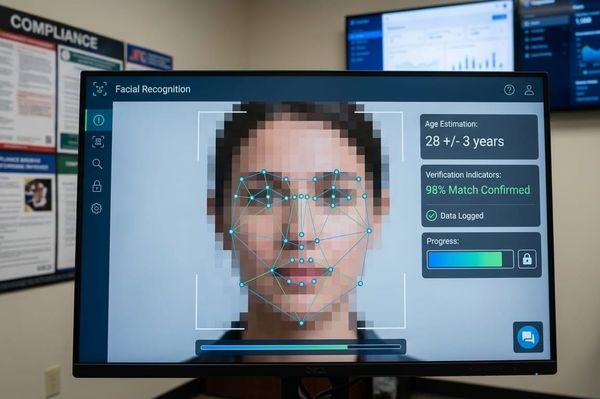
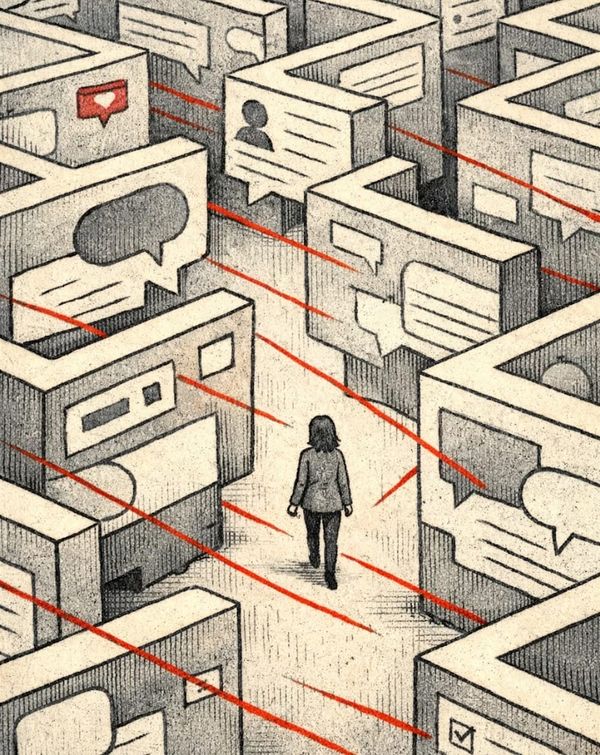
Instead of dams, power plants and roads, the infrastructure on offer today is digital: cloud regions, undersea cables, payment systems, national identity databases, and the computing power, models and algorithms behind artificial intelligence.
Most of this infrastructure is owned by a handful of foreign companies. What should be publicly owned is now private property, and the people who depend on it have no say in who runs it or how it is run.
AI is only the newest layer, and it is being handed out the most freely of all. Free credits for startups, national AI programs for poorer countries, promises of investment in exchange for tax breaks and flexible laws, and all from the same few tech companies.
There is no conspiracy. The business rationale is stated plainly by the companies themselves: free credits are a way to acquire customers. The company absorbs the early cost, and in return the user — the public — builds on the company's platform, learns its tools and moves data onto its servers. Once the credits run out, the user keeps paying.
This is Perkins's trick in newer clothing. A business does not default on Microsoft the way a country defaults on a loan, but it cannot easily walk away either. Switching costs, the weight of accumulated data and proprietary standards produce a kind of lock-in that looks nothing like debt but works much the same way.
And the leverage does not stop with the company. The government of the country where the technology is made also has power. In 2025, after the United States sanctioned the chief prosecutor of the International Criminal Court, his Microsoft email account was cut off and he was forced onto a Swiss provider. The ICC's own response was to remove the dependency, and move to open-source software.
This can happen to whole countries, not just single offices. In early 2025 the United States drew up a plan that sorted the world into tiers of access to advanced AI. A small group of close allies would have no limits, most of the world would be rationed by quota, and a blocked list of adversaries would get nothing. The plan was withdrawn within months, after dozens of governments objected to being placed in the second tier, but the restrictions on China stayed.
But it didn't take long for limits to be placed again. In June 2026 the US government, citing a security risk, ordered Anthropic to shut off its two most powerful models, Fable and Mythos, for every foreign national on earth, including the company's own non-citizen staff. Unable to screen its users by nationality, Anthropic took the models down for everyone worldwide within hours, even as it publicly disagreed with the order. Two weeks later, OpenAI limited its newest models to a handful of government-approved partners at Washington's request, while saying it hoped the arrangement would not become the norm. Anthropic's models returned only after it negotiated in Washington.
For Perkins's hit men the lever was debt and the goal was money. Here the lever is the technology itself, and the goal is control.
Bandung and the Non-Aligned Movement
The Non-Aligned Movement is remembered as beginning in 1955, when twenty-nine Asian and African states met at Bandung in Indonesia and refused the Cold War demand that they pick a side. But it didn't start with Bandung. The refusal had been building for decades, and it was driven by people, not governments.
By the 1920s much of the colonised world was already in revolt. In India the non-cooperation movement was organising boycotts and strikes. In the Dutch East Indies, Sarekat Islam had grown into a mass organisation with a membership in the millions. Egypt had risen against British rule in 1919. It was a broad popular refusal, and it needed somewhere to converge.
In February 1927 it found one, and delegates of movements that already had millions behind them gathered in Brussels under the banner of the League Against Imperialism. Most of them came from countries still under colonial rule, with the stated aim of building a mass anti-imperialist movement across the world. A young Jawaharlal Nehru was there as General Secretary of the Indian National Congress. Mohammad Hatta was there for the Indonesian nationalists, and within months the Dutch would arrest him for sedition. Sarekat Islam sent its people, and so did Algerian and Senegalese nationalist groups. The purpose of the meeting was to knit those movements into one.
The movement around the refusal came first. The organising came next. The institution came last. It's important to note that the movement made the institution, never the other way around.
The parallel to our current time is not hard to see. The world is again splitting into two technological camps, an American one and a Chinese one, and most countries are being asked to choose a patron and plug into one empire's cloud or the other's.
A model of your own is not the answer
The obvious reply is to build your own. India has built open, state-run infrastructure for identity and payments, and pooled tens of thousands of publicly funded processors to lower the cost of building AI at home. Mexico has built a national supercomputer. South Korea's "Everyone's AI" programme treats a chatbot as public infrastructure rather than a private subscription.
But a national model is not necessarily in the public interest these days. It is often just the same trap with a different owner. An AI system built and run by a state can watch and steer its own population as easily as any foreign company. A large country in the Global South can use its model to pull smaller neighbours into dependence, exactly as the old powers did. Swapping a corporation in San Francisco for a ministry in a country is still a form of capture. The question that has to be asked is not whether the technology is ours, but whether it answers to the people who use it.
Alternatives that enable refusal
So what would an actual alternative look like? It is worth returning to an idea that already exists, in the one corner of technology that was built from the start around the right to refuse.
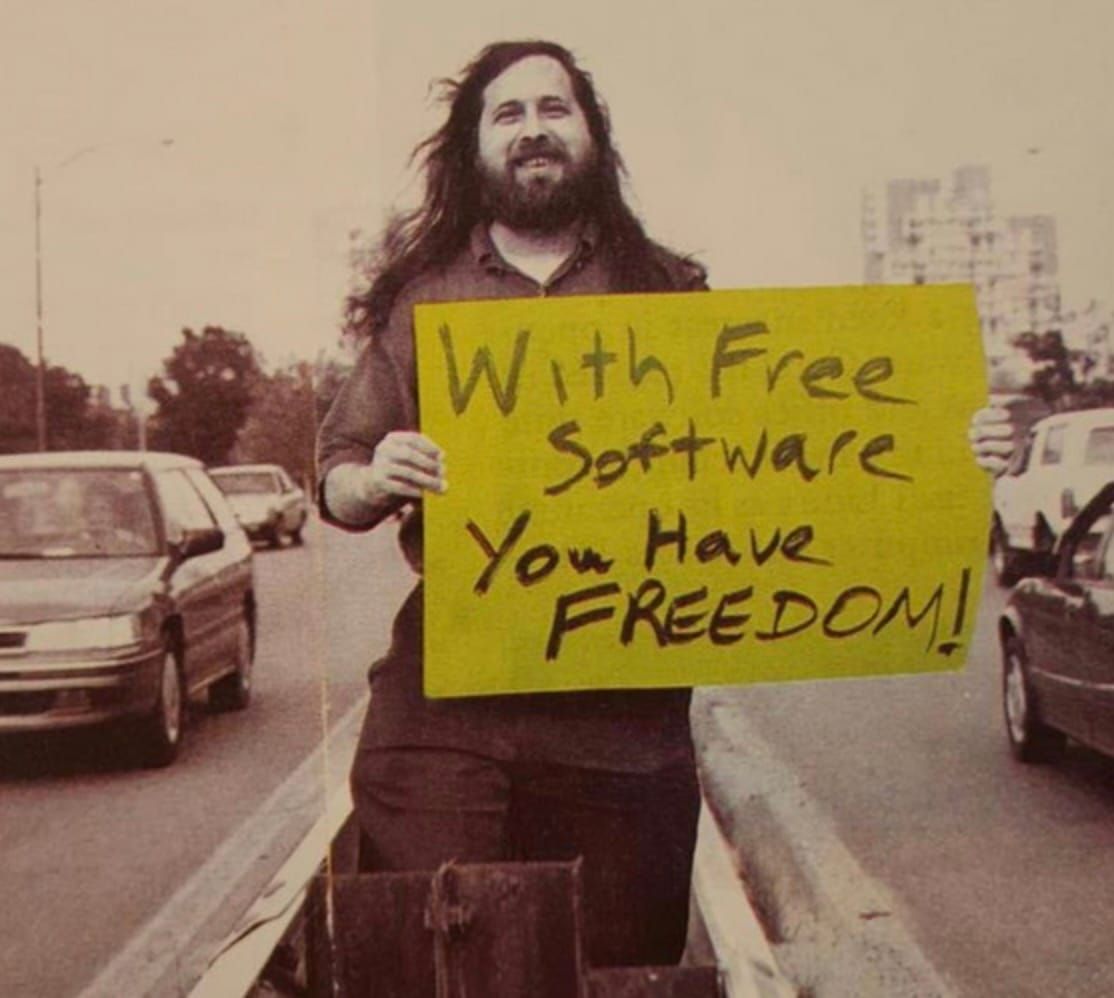
In 1985 a programmer named Richard Stallman set up the Free Software Foundation. Stallman had come out of the hacker culture at MIT's Artificial Intelligence Lab, where sharing code was the norm, and he built the Foundation around the concept that software should guarantee its users the freedom to run it, study it, change it and share it. He was talking about liberty rather than price, "free as in free speech, not free as in beer". And his solution was a legal one. Copyleft, written into the GNU General Public License, uses copyright to guarantee openness instead of restricting it. The licence lets anyone use the software, build on it, even sell it, but it does not allow what gets created to be locked up or made proprietary. It is a refusal of proprietary, closed systems, written into a licence.
Importantly, it's worth recalling what happened to that idea, especially as a warning to those embarking on similar ideas today. In 1998 it was, in effect, rebranded. A group of programmers put forward a new name, "open source", chosen specifically to drop the talk of freedom and make the concept more comfortable for business. It worked. Today some of the largest contributors to open source are the big technology firms themselves, who run the most closed systems on earth while wearing the movement's colours. Open source was welcomed precisely because it had agreed to stop saying no. Not all openness is refusal. There is a permissive kind that lets power take without giving anything back, and there is the copyleft kind that structurally forbids it.
The alternative worth building — public-interest AI, and the infrastructure it runs on — has to be the second kind. It would be small rather than vast, cooperatively owned rather than corporate or state property, and governed by the people who depend on it rather than by shareholders or ministries. Infrastructure held in common. Models trained and run on terms the community sets. Not free as in free credits, but free as in freedom, which cannot be revoked when the strategy changes.
None of this builds itself. It is tempting to think the answer to captured infrastructure is simply better infrastructure, a public cloud or an open model or a chip of one's own, and that if the tool is good enough people will come. They will not. That is the naive premise on which a great deal of public-interest technology has already failed. The tool never sells itself. The community that understands why it matters has to be built first, or the thing arrives to an empty room. That is the real lesson of the anti-colonial movements. The refusal came from the ground up, from millions of people who had decided they had had enough, and the organisers followed. It cannot be decreed from the top down, or even the middle down.
The beginnings are already here. A growing number of individuals and small groups are naming the problem and drawing others in, and out of that the first movements are taking shape. Much of that work is exposure: making plain how closely the big technology and AI firms now work with governments, whose interests the arrangement serves, and who is left dependent by it. The anti-colonial movements started in the same place. They named the relationship for what it was, refused to accept it as natural, and wanted the coloniser gone. The equivalent now is to bring the quiet partnership between platform and state into the open, and to treat it as a choice rather than a fact of life.
There is a long way to go, but the ground is fertile. People are increasingly willing to ask who should own the infrastructure, the algorithms and the models their lives depend on, and to experiment with new ways of governing them. The technology is the easy part. Building the movement around it is the hard part, and that decides everything.
Today, dependency on AI is not imposed at gunpoint. It is offered as a world-transforming revolution at a bargain price, and we are buying into it. Governments fear falling behind, people fear missing out, and those pressures do the work that coercion once did for the economic hit men. The real price is not only monetary. It includes the cost to people and the planet, and by the time it is clear, leaving is no longer an option. The people who built the road to Bandung understood the reply to that, and the Free Software Movement wrote it into a licence, turning copyright into a tool for openness. People can refuse together, and they can build the refusal into something no one can later take away.
There is reason to think people are ready to hear it. A generation watched social media arrive as something free and fun and turn into something addictive and corrosive, built to hold attention rather than to serve the people using it, its real costs clear only once everyone was already hooked. The unease that is gathering around AI is the same unease, arriving earlier. People can see the shape of what is coming, and they can see who stands to own it. That anger is not a problem to be managed. It is the start of a movement.
AI does not have to be built the way social media was, by a few companies answerable to none of the people who depend on them. It can be built the other way, owned in common and governed by those who use it, on terms they set and can keep. The economic hit men always counted on their victims seeing the trap too late, once the power had already changed hands. This time there is still time to see it, and to build the thing that says no before that power is signed away.
Note: The title borrows from Richard Stallman's "free as in free speech, not free as in beer," the line at the heart of the free software movement. It is also the title of Sam Williams's biography of Stallman